


Modern Canna Laboratories offers comprehensive testing of plant-touching materials and any materials that come into contact with finished cannabis goods. This includes not only the cannabis plant and extracts, but also the packaging, delivery hardware/devices, source water, nutrients, and growing mediums used in production. Our scientific team understands that ensuring the safety and compliance of these materials is just as critical as testing the cannabis itself. Below we explain why testing packaging, hardware, and other inputs is essential, and how Modern Canna’s methods and expertise help Medical Marijuana Treatment Centers (MMTCs) and producers maintain the highest quality standards.
Materials and Inputs We Test
We provide certified testing for a wide range of cannabis-related materials and inputs, including:
- Product Packaging: Containers, vape cartridges, pre-roll papers, edible wrappers, tincture bottles, syringes, and other packaging in direct contact with cannabis products. These materials are examined for contaminants like heavy metals, plastics residues, and other substances that could leach into the product.
- Delivery Hardware and Devices: Vaporizers, vape pen batteries, cartridges, pods, pipes, and other marijuana delivery devices are tested to ensure they meet safety standards (e.g. no heavy metal leaching or unsafe additives) and comply with Florida’s latest regulations on approved devices.
- Source Water and Nutrients: Irrigation water and nutrient solutions used for cultivation are analyzed for contaminants (such as heavy metals, bacteria, or chemicals). This ensures that the water feeding cannabis plants is free of harmful substances and meets regulatory standards.
- Growing Mediums and Soils: We test soil, coco coir, and other growing media for pathogens, pesticide residues, or heavy metals that could be taken up by the plant. Verifying the cleanliness of the grow medium helps prevent contamination from the ground up.
- Production Inputs: Other inputs like fertilizers, solvents, and processing aids can also be examined for purity and compliance, as needed, to support quality assurance across your entire operation.
By offering a full spectrum of testing services for these materials, Modern Canna serves as a one-stop compliance partner for the cannabis industry. If it touches your cannabis, we can test it.
Why Test Cannabis Packaging and Hardware?
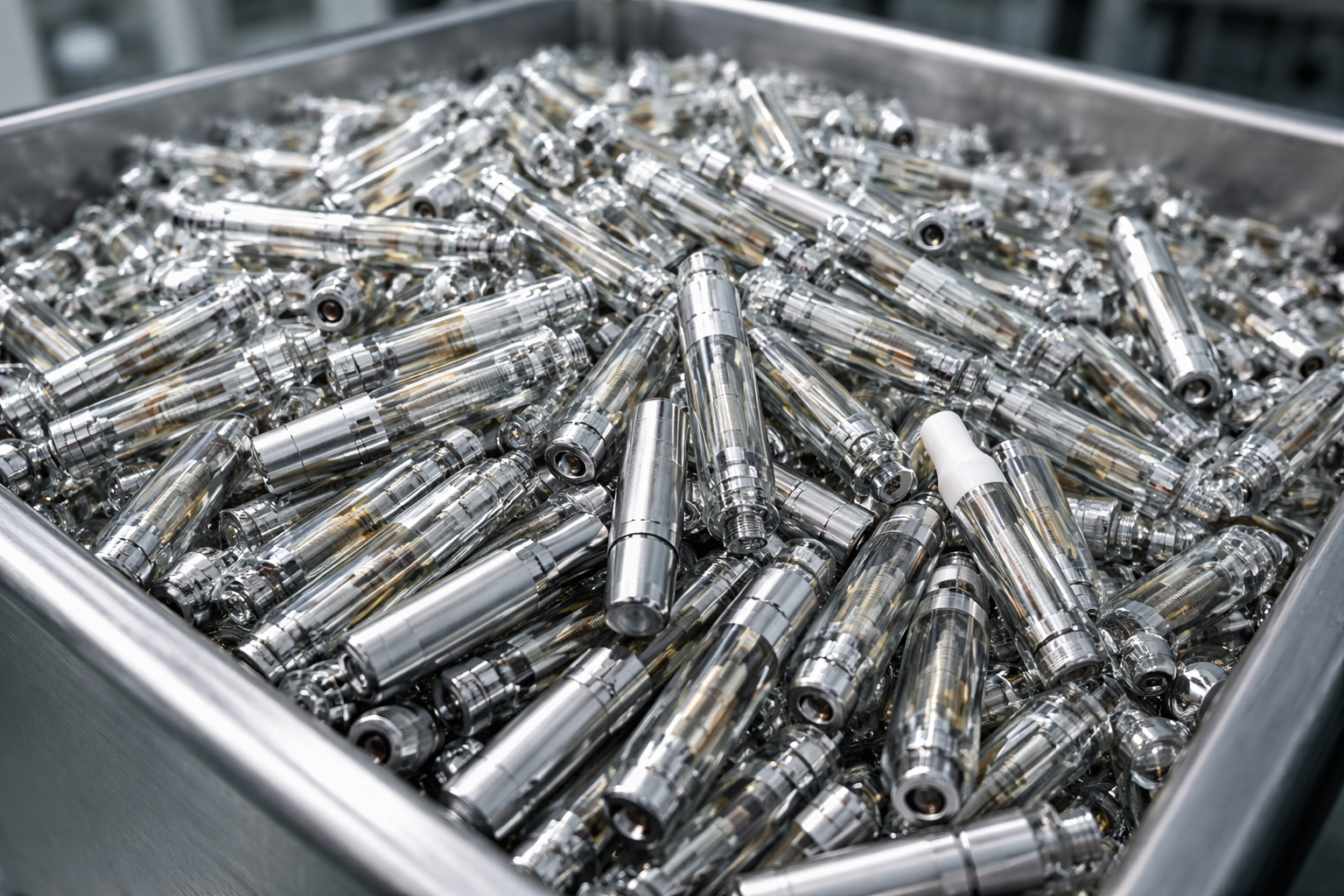 Even if your cannabis flower or extract is perfectly clean, the materials that hold or deliver the product can introduce contaminants. For example, heavy metals from packaging or vape hardware can leach into the cannabis oil or flower over time. Continuous exposure to heavy metals poses serious health risks, including heavy metal toxicity. Similarly, plastic components or glues in packaging might degrade and contaminate edibles or tinctures if not properly vetted. Testing these materials helps identify such risks before they reach patients.
Modern Canna’s own research highlights the importance of packaging and hardware testing. In a 2021 study on cannabis product packaging, our lab found that packaging materials can contribute to heavy metal leachability without proper quality control testing. Using expertise from environmental science, Modern Canna chemists developed a specialized heavy metal leachability test (adapted from EPA’s Toxicity Characteristic Leaching Procedure) to simulate real-world conditions.
Modern Canna’s heavy metal leachability study revealed that a significant fraction of vape cartridges can leach metals like lead and cadmium into cannabis oil. Rigorous testing using simulated-use conditions (soaking cartridges in cannabis-compatible oils under heat) enabled detection of leached metals, helping identify unsafe hardware before it reaches patients.
Proactive testing of packaging and devices is not only a best practice for product safety – it’s increasingly a regulatory expectation. Florida’s Department of Health (Office of Medical Marijuana Use, OMMU) has introduced strict new rules for Marijuana Delivery Devices that emphasize product safety and consumer protection. (For details, see our blog post on Florida’s new device rule, which is cross-linked below.) These rules were motivated by concerns like heavy metal leaching, unsafe additives, and child safety. MMTC operators are now required to ensure their delivery devices and packaging meet specific standards for materials and labeling. By testing your materials with Modern Canna before the regulators do, you can identify and address any issues early – avoiding costly recalls, protecting patients, and staying ahead of compliance deadlines.
Modern Canna’s Testing Approach and Credibility
Modern Canna is an ISO/IEC 17025 accredited laboratory with extensive experience in both cannabis testing and environmental analysis. This dual expertise uniquely positions us to analyze packaging and hardware for contaminants using advanced instrumentation and validated methods. Our heavy metal analyses are performed with Inductively Coupled Plasma Mass Spectrometry (ICP-MS), capable of detecting trace levels of metals like lead, cadmium, arsenic, and mercury. We tailor our leach-testing methods to the sample matrix: for instance, using cannabis oil simulants (such as MCT oil) and realistic conditions (heat, time) to test vape cartridges, rather than harsh solvents that don’t reflect actual use. This means our results closely mirror real-world performance of your packaging and devices.
 In addition to heavy metals, Modern Canna can screen packaging and inputs for a variety of potential issues. These include residual solvents (in packaging inks or glues), microbial contamination (in water or soil), pesticide residues (in cultivation inputs or storage containers), and more – all using state-of-the-art analytical techniques. We adhere to strict sample collection protocols and quality control standards at every step. Our lab has been trusted by more Florida MMTCs than any other for compliance testing, and we bring that same rigor to ancillary material testing.
Be Proactive and Protect Your Operation
Investing in packaging, hardware, and input testing is an investment in the longevity and integrity of your cannabis business. By ensuring no heavy metals are leaching from your vape pens or containers, and that your water, nutrients, and soils are clean, you protect your end consumers and your company’s reputation. You also stay ahead of regulatory actions – a lesson many in the industry have learned the hard way. Contamination issues discovered after products are on the market can lead to product failures, recalls, or even license violations. Proactive testing helps you avoid these scenarios by catching problems early.
Modern Canna can also assist in compliance with new rules. For example, Florida’s recent emergency rule on cannabis delivery devices requires MMTCs to institute recall procedures for any unsafe devices. With our testing data in hand, you can confidently document that your hardware is safe and compliant, or take corrective action well before any mandate for recall. (See our blog “New Florida Rule Tightens Restrictions on Cannabis Delivery Devices” for more on creating compliant device programs.)
In short, don’t wait for a regulator or a customer complaint to discover an issue with your packaging or hardware. Leverage Modern Canna’s comprehensive testing services to validate every component that touches your cannabis. We provide fast turnaround times, expert interpretation of results, and guidance on remediation if a material is found to be problematic. Our team is here to help MMTC operators and cannabis product manufacturers uphold the highest standards of safety, quality, and regulatory compliance.
Cross-References:
- Modern Canna Blog: Are Your Cannabis Packaging Materials Contributing to Heavy Metals Leachability? – Learn more about our heavy metal packaging study and see data on how different packaging types can contaminate products.
- Modern Canna Blog: New Florida Rule Tightens Restrictions on Cannabis Delivery Devices – Overview of Florida’s latest regulations (Rule 64ER25-5) on approved device design, labeling, and recall requirements, and what they mean for MMTCs and patients (this is the companion article highlighting the regulatory context).